
When Abbey Wemimo moved from Lagos, Nigeria to the United States in the late 2000s, his family experienced firsthand the invisible wall that keeps millions of hardworking people out of the American economy. His widowed mother had saved diligently and worked multiple jobs, but when she walked into a bank to borrow a few thousand dollars, she was flatly rejected. The reason was as simple as it was devastating: she had no credit score.
Without an established credit history, mainstream banks treated her as if she didn’t exist. Desperate to cover expenses, she had to turn to a predatory payday lender who charged an exorbitant 400% interest rate. To secure the loan, she had to pawn the only heirloom she owned: her wedding ring.
Around the same time, thousands of miles away, Samir Goel was growing up in a middle-class Indian immigrant household where money was managed with extreme caution. As he entered adulthood, he watched close relatives and community members struggle through the exact same bureaucratic paradox: they paid thousands of dollars in rent on time every single month, yet the financial system rewarded them with zero credit credibility.
When Wemimo and Goel met years later, they realized that their childhood memories were not isolated incidents of bad luck. They were symptoms of a broken, trillion-dollar blind spot in global finance.
In America, rent is the single largest monthly expense for over 100 million people, often consuming 30% to 50% of their total income. Yet for decades, credit bureaus and financial institutions only tracked debt—mortgages, auto loans, and credit card balances. If you paid your rent late, your landlord reported you to collections, destroying your financial standing. But if you paid your rent on time for 20 consecutive years, your credit score did not increase by a single point.
Determined to bridge this systemic divide, the duo launched Esusu in 2018. Four years later, the company reached a $1.2 billion valuation, becoming one of the very few black-and-brown-led fintech unicorns in American venture capital history.

The Relentless Hustle: 326 Rejections Before the Breakthrough
Silicon Valley loves the myth of the overnight success, but the reality of building Esusu was a brutal grind against institutional skepticism.
When Wemimo and Goel first pitched the idea of building a nationwide rent-reporting platform, traditional venture capital firms turned them down in droves. In total, the founders endured 326 consecutive rejections from investors.
Venture capitalists failed to understand the urgency of the problem. Most partners in wealthy Silicon Valley VC firms had high credit scores, home mortgages, and private wealth managers. To them, the idea of people needing credit scores to rent an apartment or buy a car felt like a niche issue rather than an untapped multi-billion-dollar market.
Running dangerously low on capital, the founders refused to fold. They bootstrapped with personal savings, maxed out credit cards, slept on friends’ floors, and applied for grants from non-profit foundations that cared about financial equity.
Their persistence paid off when early impact funds, and eventually tennis legend Serena Williams (via Serena Ventures) and SoftBank Vision Fund 2, recognized that solving credit invisibility was not just charity—it was one of the largest market opportunities in modern enterprise software.
The Business Model: Building a Double-Sided Win
The genius of Esusu lies in its business model. Instead of relying on a purely non-profit approach, Wemimo and Goel built a highly profitable, scalable B2B2C enterprise platform that aligns the incentives of both property managers and tenants.
1. The Renter’s Benefit
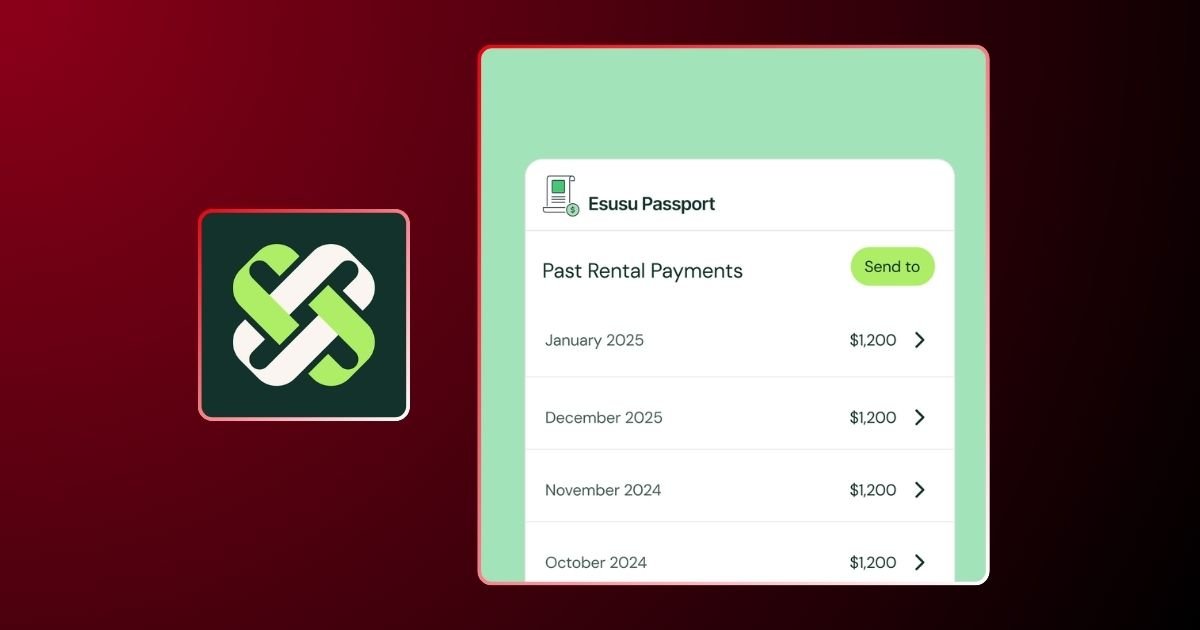
When a tenant lives in an Esusu-partnered building, the software automatically tracks their monthly on-time rent payments and transmits the verified data directly to the three major credit bureaus: Equifax, Experian, and TransUnion.
- Within months, renters frequently see their credit scores jump by 30 to 100+ points.
- Those with zero credit history establish a prime credit score for the first time in their lives, unlocking lower car loan rates, credit cards, and eventually home mortgages.
2. The Landlord’s Economic Advantage
Property management giants (such as Related Companies, Starwood Capital, and Goldman Sachs Asset Management) pay Esusu subscription fees per unit because the software directly increases their bottom line:
- Higher On-Time Collections: Renters are strongly motivated to pay on time because their credit score directly depends on it.
- Tenant Retention: Residents stay longer in buildings that actively help them build their financial future.
- Zero Overhead: The system integrates seamlessly into existing property management software like Yardi, RealPage, and Entrata without extra staff workload.
The Zero-Interest Relief Fund: Turning Crisis Into Loyalty
During the height of global economic turbulence and unexpected layoffs, millions of American families faced the imminent threat of eviction. Traditional landlords often reacted by filing court notices, displacing families and incurring massive legal expenses.
Esusu introduced a game-changing buffer: the Esusu Rent Relief Fund.
Through this program, Esusu provided zero-interest, zero-fee micro-loans directly to renters who suffered sudden job loss or medical emergencies. The loans were paid straight to landlords to cover rent, preventing eviction, keeping tenants housed, and allowing families to repay the principal in flexible installments once they regained employment.
This initiative demonstrated the core principle that defines modern stakeholder capitalism: solving human distress can directly strengthen a company’s operational stability.
Old Credit Scoring vs. The Esusu Model
| Parameter | Legacy Credit System | The Esusu Model |
|---|---|---|
| Rent Payment Recognition | Ignored by default | Reported directly to all 3 credit bureaus |
| Credit Invisibility Barrier | Takes years of borrowing debt to build | Built naturally through on-time rent |
| Landlord Motivation | Punitive (Late fees & evictions) | Incentive-based (Rewarding on-time payments) |
| Default Reaction to Emergencies | Immediate collections & court filings | 0% Interest Rent Relief support |
| Target Population | Established wealthy borrowers | Working-class families & immigrants |
From Surviving on Grants to a $1.2 Billion Powerhouse
The journey from a struggling startup rejected by 326 venture capitalists to a Silicon Valley unicorn was not an overnight miracle—it was a calculated masterclass in scaling enterprise software with a social mission.
When Esusu initially launched, few investors believed that major real estate landlords would care about their tenants’ credit scores. But as the platform proved that renters with credit incentives paid their rent faster, the company’s growth curve turned vertical.
The Milestones That Changed Everything:
- The Early Believers: While traditional Sand Hill Road VCs passed on the company, impact investors and tennis icon Serena Williams (via Serena Ventures) stepped in early, providing the critical seed capital the founders needed to hire engineering talent.
- The Federal Breakthrough: In a massive validation of their technology, US government-backed mortgage giants Fannie Mae and Freddie Mac formed nationwide partnerships with Esusu. They began offering financial incentives to property owners who adopted Esusu’s rent-reporting software, instantly unlocking millions of apartment doors across the country.
- The Unicorn Funding Round: In early 2022, SoftBank Vision Fund 2 led a massive 130 million dollar Series B funding round, officially valuing Esusu at 1.2 billion dollars. The milestone cemented Abbey Wemimo and Samir Goel into a rare cohort: one of the very few Black and brown-led founding teams to build a billion-dollar venture-backed fintech unicorn.
The Real-World Numbers Behind the Hype
Beyond the financial valuation, Esusu’s true scale lies in the wealth it has unlocked for working-class families across all 50 US states:
- Over 4 Million Homes Covered: Partnered with premier real estate developers, including Related Companies, Starwood Capital, and WinnResidential.
- Over $25 Billion in Rental Volume Tracked: Converting ordinary monthly expenses into verified credit data.
- Average Credit Score Jump: Renters who started with no credit established prime credit scores within months, routinely seeing credit increases between 30 to 100+ points.
- Unlocking the American Dream: Higher credit scores allowed thousands of first-generation immigrants and low-income families to qualify for their first auto loans, low-interest credit cards, and family mortgages.
Today, Esusu continues to expand its footprint, evolving from a pure rent-reporting software into a comprehensive financial health network for underserved communities across the globe.
Key Takeaways for Startup Founders
1. Your Personal Pain is Your Greatest Moat
Wemimo and Goel didn’t discover their startup idea through market research reports. They lived the problem as immigrant children watching their mothers fight against an exclusionary financial system. That lived experience gave them the resilience to survive 326 investor rejections.
2. Profit and Purpose Are Not Mutually Exclusive
The most durable social impact companies are not charities—they are high-margin businesses that generate immense financial return for their enterprise clients while uplifting everyday consumers.
3. Incentivize All Sides of the Market
Esusu succeeded because it made landlords wealthier while making tenants more financially resilient. When your product creates mutual economic upside, enterprise adoption scales exponentially.
The Final Verdict
The story of Esusu is a testament to the transformative power of perspective in technology. While traditional finance spent decades viewing low-income and immigrant communities as high-risk liabilities, two founders proved that these populations were merely underserved assets waiting for the right bridge.
By turning rent receipts into credit scores, Esusu has rewritten the playbook on what a modern FinTech startup can achieve.
Frequently Asked Questions
Esusu operates primarily on a B2B SaaS model. Large property management firms and institutional landlords pay subscription fees per apartment unit to access Esusu’s rent-reporting software, analytics, and tenant retention tools.
Esusu focuses on positive rent reporting. The platform is designed to report on-time payments to help consumers build credit. If a tenant experiences financial hardship, Esusu works to provide relief options rather than aggressively penalizing credit records.
Esusu reports verified rental payment data to all three major national credit reporting agencies in the United States: Equifax, Experian, and TransUnion.

