
For 25 years, taking on Google in web search was considered commercial suicide in Silicon Valley. With over 90% global search market share and an annual revenue exceeding $300 billion, Alphabet’s search empire looked entirely untouchable. Tech giants like Microsoft spent billions trying to dent Google’s dominance, yet user habits never budged.
Then, Google got greedy.
Over the last decade, a standard Google search deteriorated from a crisp list of answers into a cluttered maze of sponsored ad banners, affiliate links, and automated SEO spam. Users no longer got direct answers; they got a homework assignment to click through ten websites and dodge pop-up ads just to find a simple fact.
When conversational AI exploded in late 2022, chatbots like ChatGPT emerged as a potential alternative. But they had a fatal flaw: they were trained on static data, could not access live web events reliably, and frequently hallucinated false information with absolute confidence.
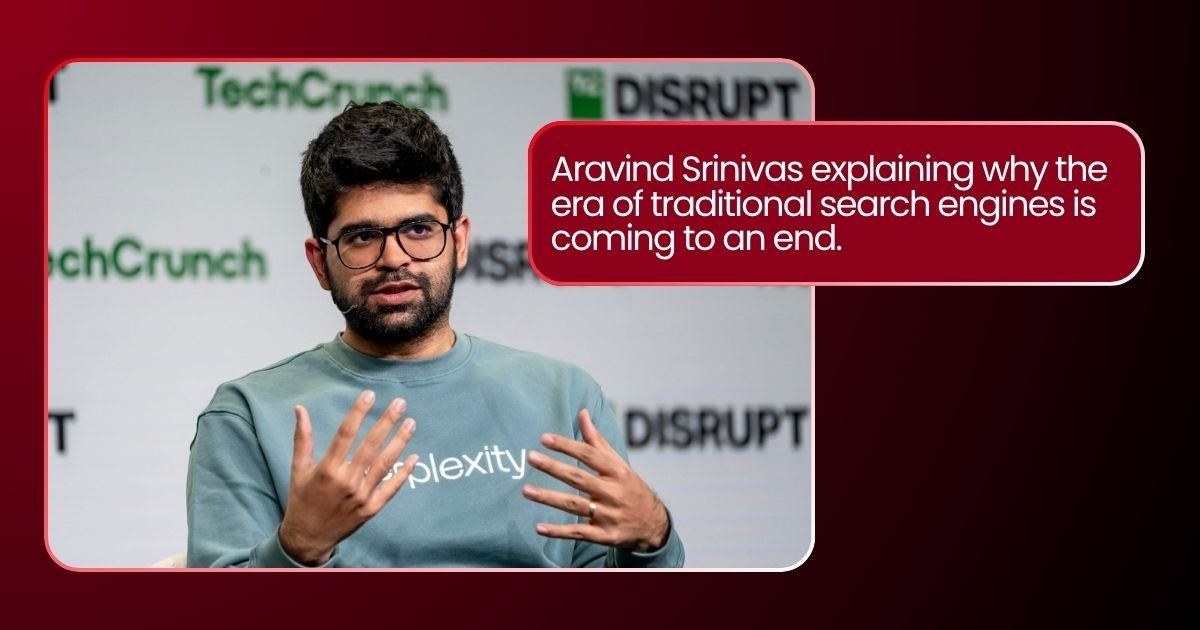
An Indian-born computer scientist named Aravind Srinivas spotted the trillion-dollar white space between Google’s ad-cluttered links and ChatGPT’s unreliable memory.
Aravind, who earned his PhD in computer science from UC Berkeley after graduating from IIT Madras, had conducted frontier AI research at both Google DeepMind and OpenAI. Alongside co-founders Denis Yarats, Johnny Ho, and Andy Konwinski, he launched Perplexity AI in August 2022 with a simple manifesto: Kill the blue links. Deliver cited truth in real time.
In less than two years, Perplexity went from an experimental demo to a $3 billion+ unicorn processing hundreds of millions of queries every month.
The Technology: How the World’s First “Answer Engine” Works
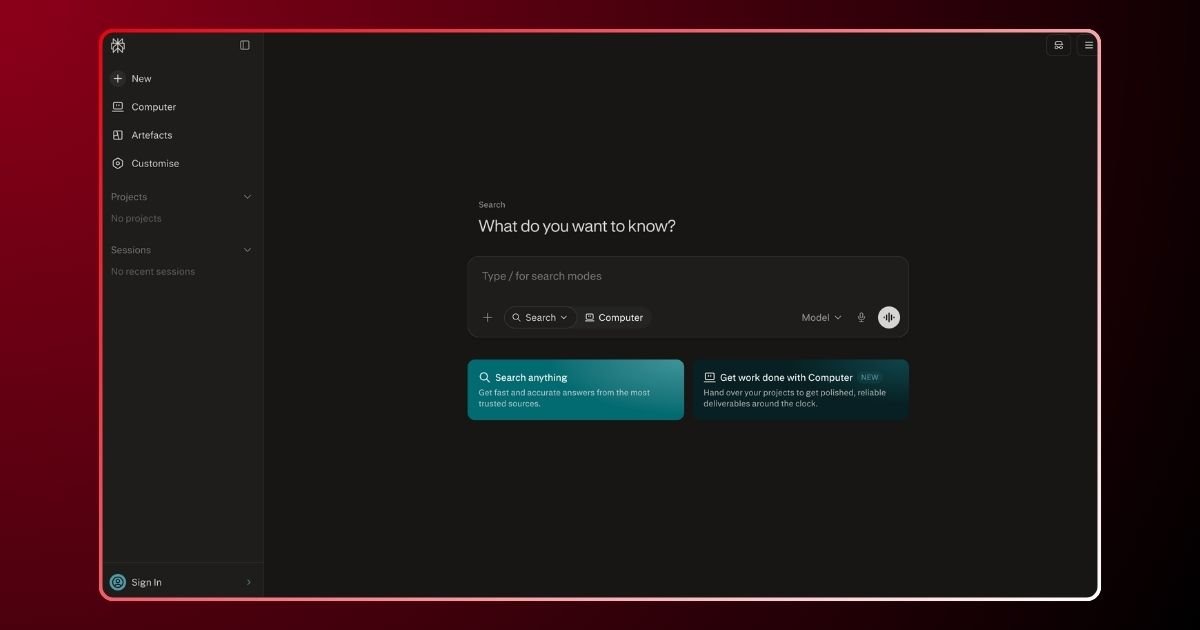
Traditional search engines index keywords; Perplexity understands intent.
Instead of relying on a standalone AI model that guesses answers, Perplexity engineered an ultra-fast Retrieval-Augmented Generation (RAG) pipeline that operates in milliseconds:
1. Multi-Source Web Scraping in Real Time
When you type a question, Perplexity instantly queries multiple live web indexes simultaneously, gathering the most up-to-date reports, academic papers, and news articles.
2. Signal-to-Noise Stripping
The engine strips away ad tracking, promotional filler, and repetitive SEO keywords, isolating only the core factual statements from high-authority sources.
3. Cited Synthesis with Numbered Footnotes
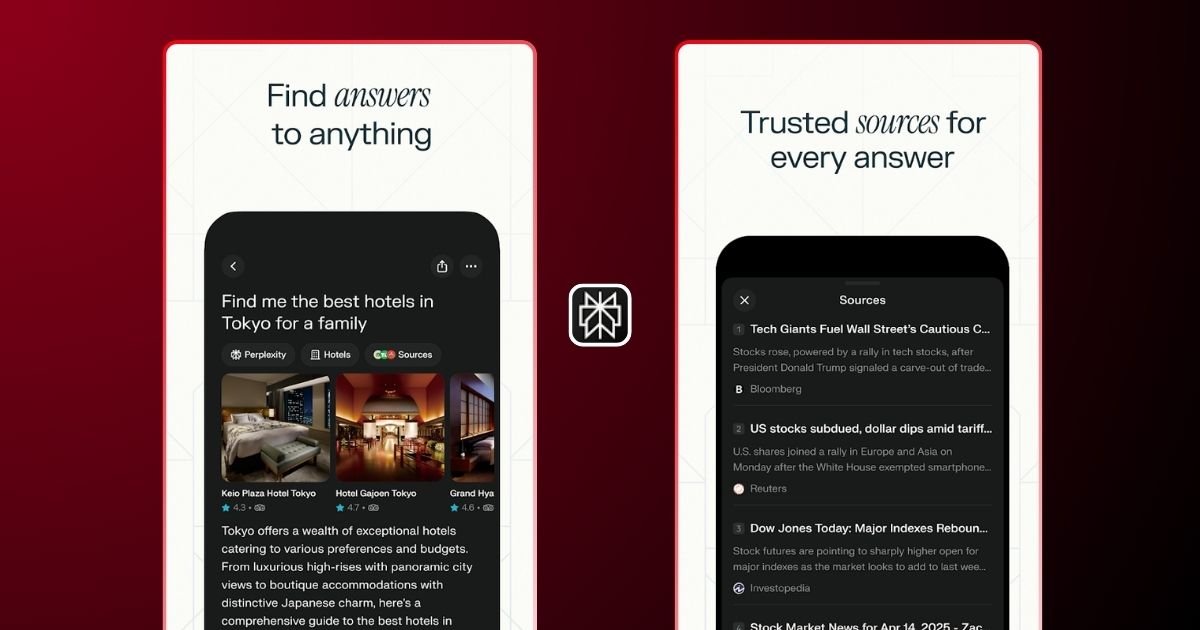
The underlying LLMs (customized models alongside Claude 3.5 Sonnet and GPT-4o) synthesize a clear, direct answer. Every single sentence includes a clickable numerical footnote pointing directly to the original web page.
If the AI makes a claim, the user can verify it in one click. By solving the hallucination problem with transparent citations, Perplexity instantly won over software engineers, researchers, financial analysts, and journalists worldwide.
Why Google Couldn’t Fight Back: The Innovator’s Dilemma
People often ask: Why didn’t Google simply build this first?
The answer lies in Clayton Christensen’s classic Innovator’s Dilemma. Google generates over $175 billion annually from Search Ads. Its entire business engine is designed around keeping users on the search results page just long enough to click high-bidding sponsored links.
If Google provides an instant, perfect, one-paragraph answer at the top of the screen:
- Nobody clicks on the sponsored ad links below it.
- Google cannibalizes its own multi-billion-dollar cash cow.
Perplexity had zero legacy revenue to protect. By monetizing through a clean $20/month Pro subscription model and enterprise licenses rather than intrusive banner ads, Perplexity offered a completely uncompromised user experience.
Winning Over Jeff Bezos and Nvidia
Perplexity’s rapid execution caught the attention of the tech world’s most aggressive operators:
- Jeff Bezos: The Amazon founder invested heavily through Bezos Expeditions after recognizing Perplexity as the first legitimate evolution in search architecture since 1998.
- Nvidia & Jensen Huang: Nvidia backed the company with both capital and preferred GPU infrastructure access, with CEO Jensen Huang publicly stating that he uses Perplexity almost daily for scientific and industry research.
- Venture Capital Giants: Top institutional funds including IVP, Bessemer Venture Partners, and NEA led successive funding rounds, rapidly driving Perplexity’s valuation past $3 Billion.
Traditional Google Search vs. Perplexity AI
| Core Feature | Traditional Google Search | Perplexity AI |
|---|---|---|
| Primary Output | 10 Blue links + Sponsored Ads | Synthesized answer with citations |
| Monetization | Pay-per-click advertising | Pro subscriptions & Enterprise SaaS |
| Verification | User manually clicks multiple tabs | Direct inline clickable footnotes |
| Follow-Up Questions | Must start a new search query | Conversational thread retention |
| Interface Quality | Cluttered with SEO-optimized blogs | Clean, ad-free markdown text |
Solving the Publisher Battle: The Revenue Sharing Model
As AI search engines grew, media outlets raised legitimate concerns about platforms scraping journalism without compensating the creators.
Rather than entering costly legal wars, Perplexity launched the Perplexity Publishers’ Program.
Under this initiative:
- Whenever an article from a partner publication (such as Time, Fortune, or Der Spiegel) is cited in an answer that generates revenue, the publisher receives a direct revenue share.
- Participating newsrooms receive free enterprise licenses for their journalists and developer API access to build custom search tools for their readers.
This pragmatic approach established the first working economic framework for how generative AI companies and professional journalism can sustainably collaborate.
The Bottom Line
Perplexity didn’t just build another AI tool; it exposed the vulnerability of a 25-year-old monopoly. By putting user curiosity ahead of ad revenue, Aravind Srinivas and his team proved that with the right architecture, even the most entrenched tech giants can be disrupted.
Frequently Asked Questions
Yes. Perplexity provides a free tier with unlimited standard searches. The paid tier, Perplexity Pro ($20/month), unlocks advanced models like GPT-4o and Claude 3.5 Sonnet, file analysis, image generation, and deep research modes.
Perplexity grounds every query in live web search data. It does not answer from static model memory alone; it reads real-time source documents and anchors every sentence to a verifiable, clickable URL citation.
Perplexity was co-founded by Aravind Srinivas, an Indian-origin AI researcher who completed his PhD at UC Berkeley and worked at OpenAI and Google DeepMind before launching Perplexity in 2022.

